Skip to content

The body has a remarkable capacity for self-repair. However, it will still depend on one critical resource: oxygen.
Most people breathe oxygen at normal atmospheric pressure without giving it much thought. But some individuals experience slow recovery, persistent fatigue, or difficulty maintaining mental clarity. As such, the question of how oxygen actually reaches damaged or depleted tissue becomes far more meaningful.
Hyperbaric oxygen therapy addresses that question through a physics-based approach. This is because the procedure works with the body’s existing systems rather than introducing external substances. Plus, it does not replace other medical care. Instead, it offers a mechanism that ordinary breathing cannot replicate.
How does hyperbaric oxygen therapy differ from simply breathing pure oxygen at normal pressure?
At normal atmospheric pressure, hemoglobin is already saturated, so additional oxygen has nowhere to go. However, inside a pressurized chamber, oxygen dissolves directly into plasma, reaching tissues that red blood cells cannot efficiently supply.
The Science of Pressure and Oxygen Delivery
Under standard conditions, oxygen travels through the bloodstream. It is primarily attached to red blood cells. This system works reliably, but it has a ceiling. Once hemoglobin becomes saturated, it cannot carry more oxygen. This occurs regardless of how deeply a person breathes. HBOT therapy changes that dynamic by raising the atmospheric pressure inside a sealed chamber.
Henry’s Law in chemistry states that the amount of a gas dissolved in a liquid increases proportionally with the gas’s pressure. Applied to human physiology, this means oxygen begins to dissolve into blood plasma, cerebrospinal fluid, and lymph fluid in concentrations that normal breathing simply cannot produce.
That shift in delivery carries real consequences. Oxygenated plasma can reach areas with reduced or compromised circulation, including deep tissues that red blood cells may not access efficiently.
At the cellular level, mitochondria use this dissolved oxygen to produce adenosine triphosphate (ATP), the molecule that powers the body’s metabolic activity. Greater oxygen availability at that level creates conditions that support energy production and tissue repair in ways that surface-level approaches cannot reach.
What Happens Inside the Chamber
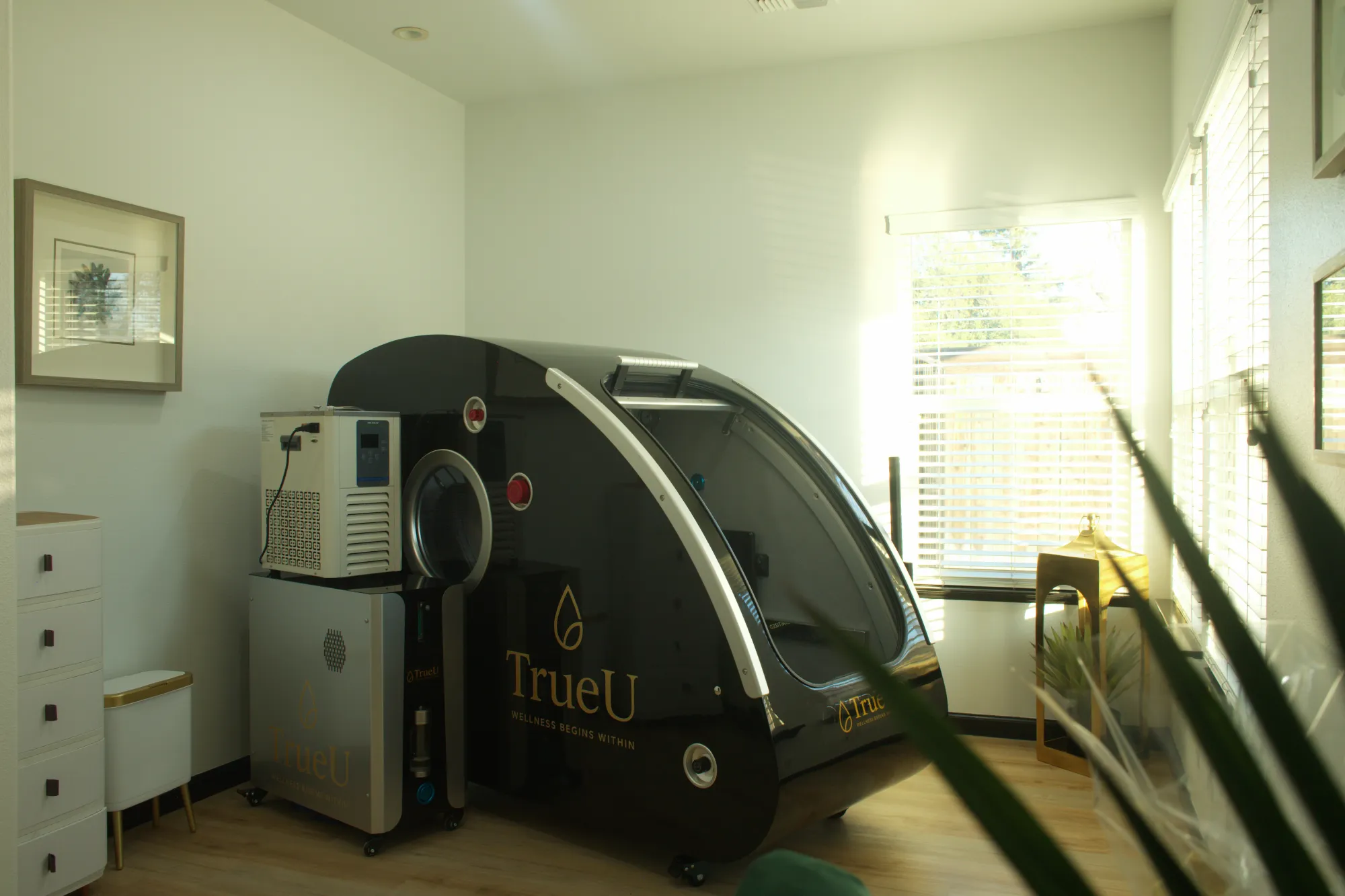
Inside a hyperbaric oxygen chamber, a person breathes oxygen-enriched air at pressures typically ranging from 1.3 to 2.0 atmospheres absolute (ATA), depending on the protocol and the provider’s clinical approach. Sessions generally last between 60 and 90 minutes. There is no medication involved, no needles, and no recovery period needed afterward. Most people use the time to read, rest, or listen to audio.
As the chamber pressurizes, a brief sensation of fullness in the ears is common, similar to what occurs when descending in an aircraft. This typically resolves within the first few minutes and does not require any intervention. The environment throughout is calm and monitored by a trained provider. Once pressure normalizes at the session’s end, most people feel relaxed. Individual responses vary considerably, and some notice a mild shift in energy or mental clarity in the hours that follow, though this is not a universal outcome.
Sessions are cumulative in their effect. A single session introduces more oxygen into the system, but the more meaningful changes in cellular repair, inflammatory regulation, and energy metabolism tend to develop across a sustained course of treatment. This is why providers typically discuss a recommended number of sessions upfront, tailored to the individual’s starting point and goals, rather than presenting HBOT as a single-session solution.
What the Research Has Examined
The most established body of evidence for hyperbaric oxygen therapy centers on wound healing: diabetic foot ulcers, radiation-induced tissue damage, and chronic non-healing wounds in particular. The FDA has cleared HBOT for a defined set of indications, and providers working within those parameters have access to decades of clinical data.
Beyond wound care, research has expanded into areas that reflect growing interest in broader recovery applications. Studies have examined HBOT’s potential role in reducing inflammation, supporting neurological recovery, and addressing brain fog and cognitive fatigue.
There is an active investigation into its use for post-COVID recovery, Lyme disease, traumatic brain injury, and chronic pain management. Hyperbaric therapy for athletes has attracted particular attention in sports medicine and rehabilitation, where the relationship between tissue repair and training timelines is a practical concern. These applications remain under investigation and are not FDA-approved indications.
The strength of evidence varies meaningfully by condition, and a knowledgeable provider should be the one to clarify what the current literature supports for any individual situation.
Determining If HBOT Is Appropriate for You
Suitability for hyperbaric oxygen therapy depends on health history, treatment goals, and a careful assessment of any contraindications. Individuals with certain ear or sinus conditions, a prior pneumothorax, or specific medication regimens may require additional evaluation before proceeding.
A thorough intake process is standard practice at any reputable provider and represents a necessary foundation before beginning any non-invasive healing therapy.
For those who meet the criteria, the therapy is generally well tolerated and fits naturally within the broader frameworks of integrative health and functional medicine. In those frameworks, the aim is to work with the body’s own regulatory systems rather than bypassing them.
Oxygen, approached this way, shifts from being a background assumption to a deliberate and measurable input, one that the body already knows how to use, now available in quantities that ordinary breathing cannot achieve.
A Foundation Worth Understanding
The mechanism behind hyperbaric oxygen therapy is grounded in well-established physiology and straightforward chemistry. Its applications are actively studied across a widening range of conditions, from tissue recovery and immune system support to cognitive performance and metabolic function.
What the therapy ultimately offers is an increase in something the body already depends on, delivered at a concentration and depth that standard breathing conditions cannot reach. For many people, recognizing that distinction is the starting point for a more informed conversation about recovery, performance, and long-term wellness.
Hyperbaric Oxygen Therapy at TrueU Wellness in Chico, CA
TrueU Wellness in Chico, California, offers a non-invasive, science-informed approach to HBOT therapy within a calm, professionally managed environment. The practice operates two dedicated hyperbaric oxygen chambers, giving patients a structured and comfortable setting for focused sessions with consistent staff support.
The approach centers on increasing oxygen availability at the cellular level. Patients breathe oxygen-enriched air under elevated atmospheric pressure, allowing oxygen to dissolve into plasma and circulate throughout the body, reaching tissues where standard delivery may fall short. This supports cellular energy production, tissue repair, and balanced inflammatory responses, making it a relevant option for individuals managing fatigue, prolonged recovery, and reduced cognitive function.
Progress develops gradually. The body’s repair processes operate on their own timeline, and meaningful changes in energy, recovery capacity, or mental clarity typically emerge across a series of sessions rather than after a single visit. Some patients incorporate HBOT into a longer-term wellness optimization plan, while others use it to support recovery during a defined period.
For anyone exploring hyperbaric oxygen therapy in Chico, CA, a consultation with our team is a practical starting point. We are trained to review individual goals, clarify what to expect, and outline a session approach suited to the situation.
Frequently Asked Questions
How many sessions does it typically take to notice results from HBOT?
While individual timelines vary, most people begin to notice changes in energy, recovery, or mental clarity after a series of sessions rather than a single visit.
Is hyperbaric oxygen therapy safe for most people?
HBOT is generally well-tolerated, though individuals with certain ear or sinus conditions, a history of pneumothorax, or specific medication regimens should complete a thorough intake evaluation before starting treatment.
Can HBOT be combined with other treatments?
Red light therapy, IV nutrient therapy, and SoftWave Therapy are among the modalities that may complement a hyperbaric oxygen therapy plan, though the right combination depends on your individual health history and goals. Thus, a consultation at TrueU Wellness is the recommended starting point before pairing any therapies.